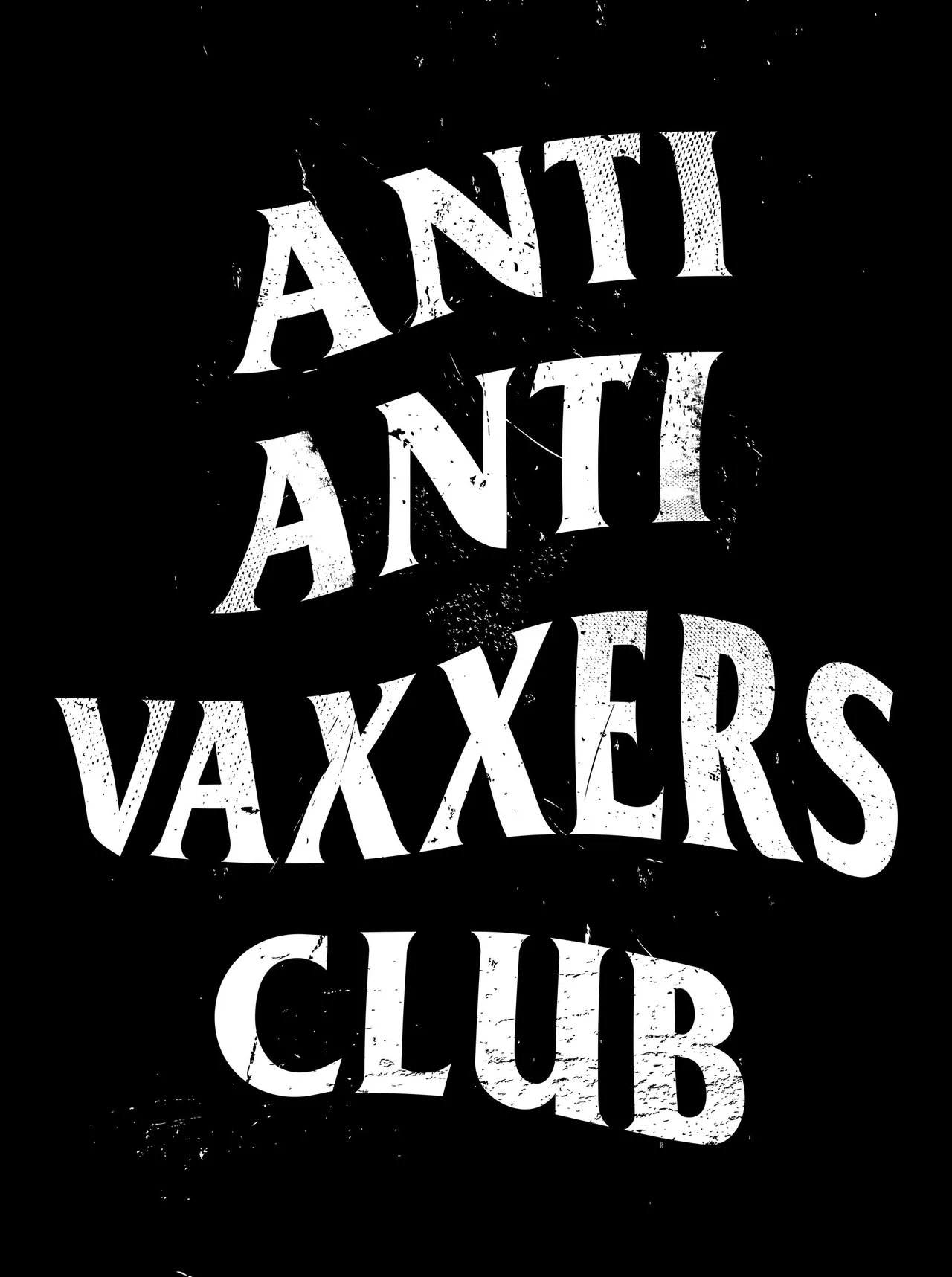
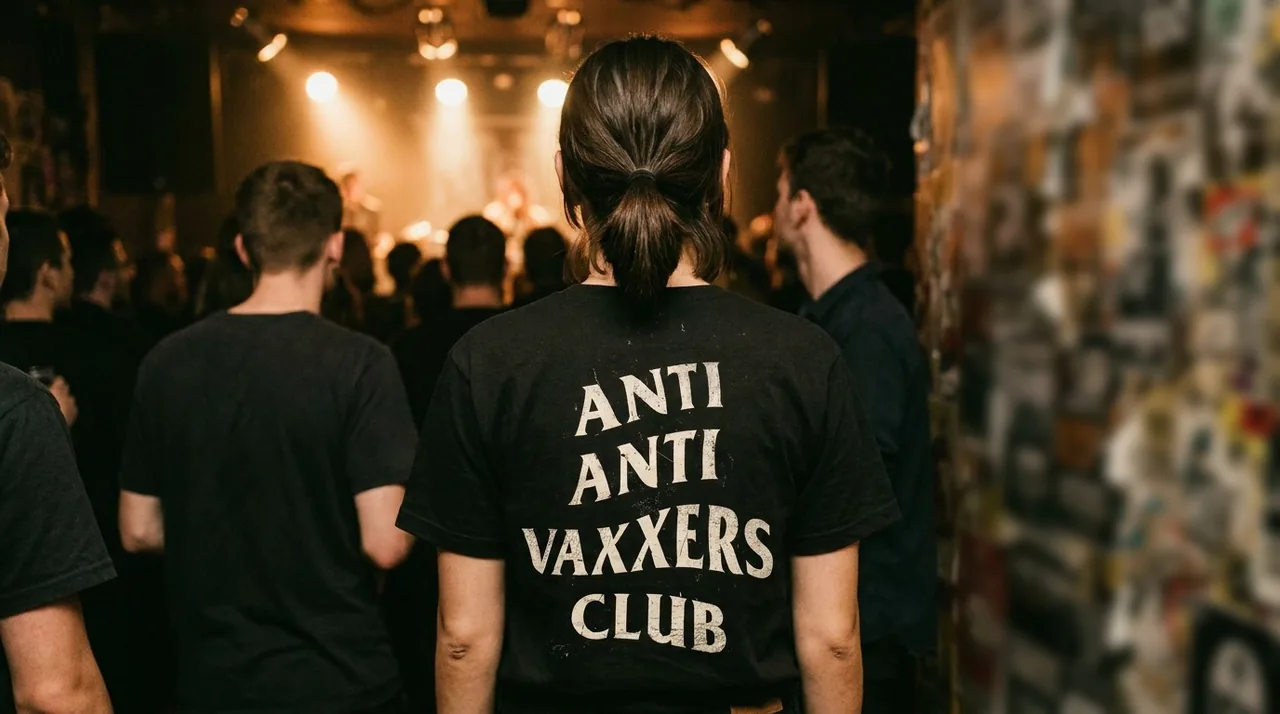
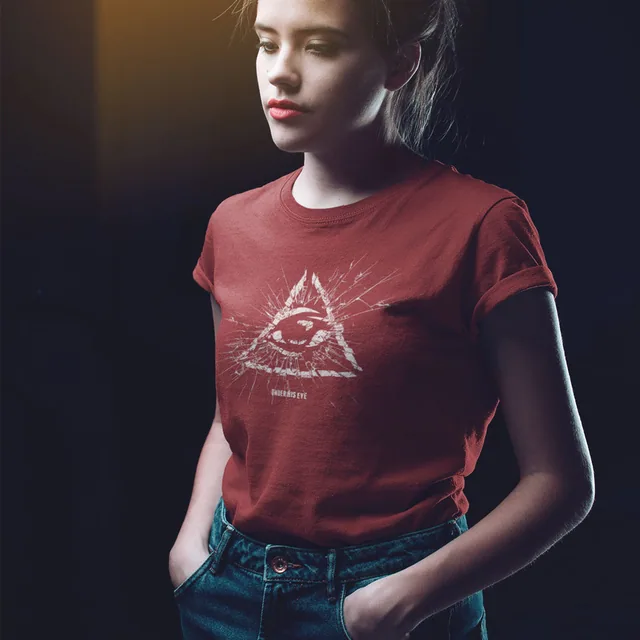
Anti Anti Vaxxers Club takes the side of the needle. The name stacks in four lines of warped white serif letters, worn like an old screen print on black, and its double negative does the arguing: it stands against the people who stand against vaccines.
It was made in 2019 as a T-shirt, with the Department's round badge on the chest and the club's name across the back.
Seven years later
When this shirt came out in 2019, the World Health Organization had just named vaccine hesitancy one of its ten threats to global health, and the United States was counting its most measles cases in a quarter of a century: 1,274. The count fell to 13 in 2020. Then it came back.
201063
2011220
201255
2013187
2014667
2015191
201686
2017120
2018381
20191,274
202013
202149
2022121
202359
2024285
20252,289
2026 (to November 6)5,182
Measles cases reported in the United States per year; the 2026 count runs to November 6. Source: Centers for Disease Control and Prevention, via Statista.
By November 6, 2026, the country had counted 5,182 cases that year, the most in more than three decades. 562 people were hospitalized and 4 died. 3,012 of the patients were children and teenagers. Five states held 65% of the cases, led by Pennsylvania with 1,476. And 96% of the patients were unvaccinated or had no known vaccination record.
Unvaccinated or unknown96%
One MMR dose2%
Two MMR doses2%
Measles cases in the United States in 2026, to November 6, by vaccination status. Source: Centers for Disease Control and Prevention, via Statista.
The doubt travels. In a Statista survey of 32 countries, run from October 2025 to September 2026, one adult in five said they have little trust in the safety of vaccines. In the United States it was one in four. South Africa had the most doubters, at 34%, and South Korea the fewest, at 6%.
South Africa34%
Poland28%
India27%
France26%
Germany24%
United States24%
Average of 32 countries19%
Mexico18%
Spain18%
China12%
South Korea6%
Share of respondents with little trust in the safety of vaccinations. 1,000 to 8,600 respondents aged 18 to 64 per country, surveyed October 2025 to September 2026. Source: Statista Consumer Insights.
Around the world, the share of one-year-olds who get their first measles, polio and whooping cough shots climbed from about 20% in 1980 to about 85% by 2010, by World Health Organization figures, and has barely moved since. The club is still taking members.